The government has announced its new Earned Settlement framework, which will make 10 years the standard starting point for settlement in the UK.
Applicants may qualify sooner, or face a longer route, depending on their contribution, integration, character and compliance.
What’s changing?
The Immigration White Paper, published in May 2025, committed to increasing the standard qualifying period for settlement from five to ten years. A Fairer Pathway to Settlement, published in November 2025, consulted on the design of a new Earned Settlement framework, including on shorter pathways for those making a greater contribution and longer pathways for those who do not comply with the rules.
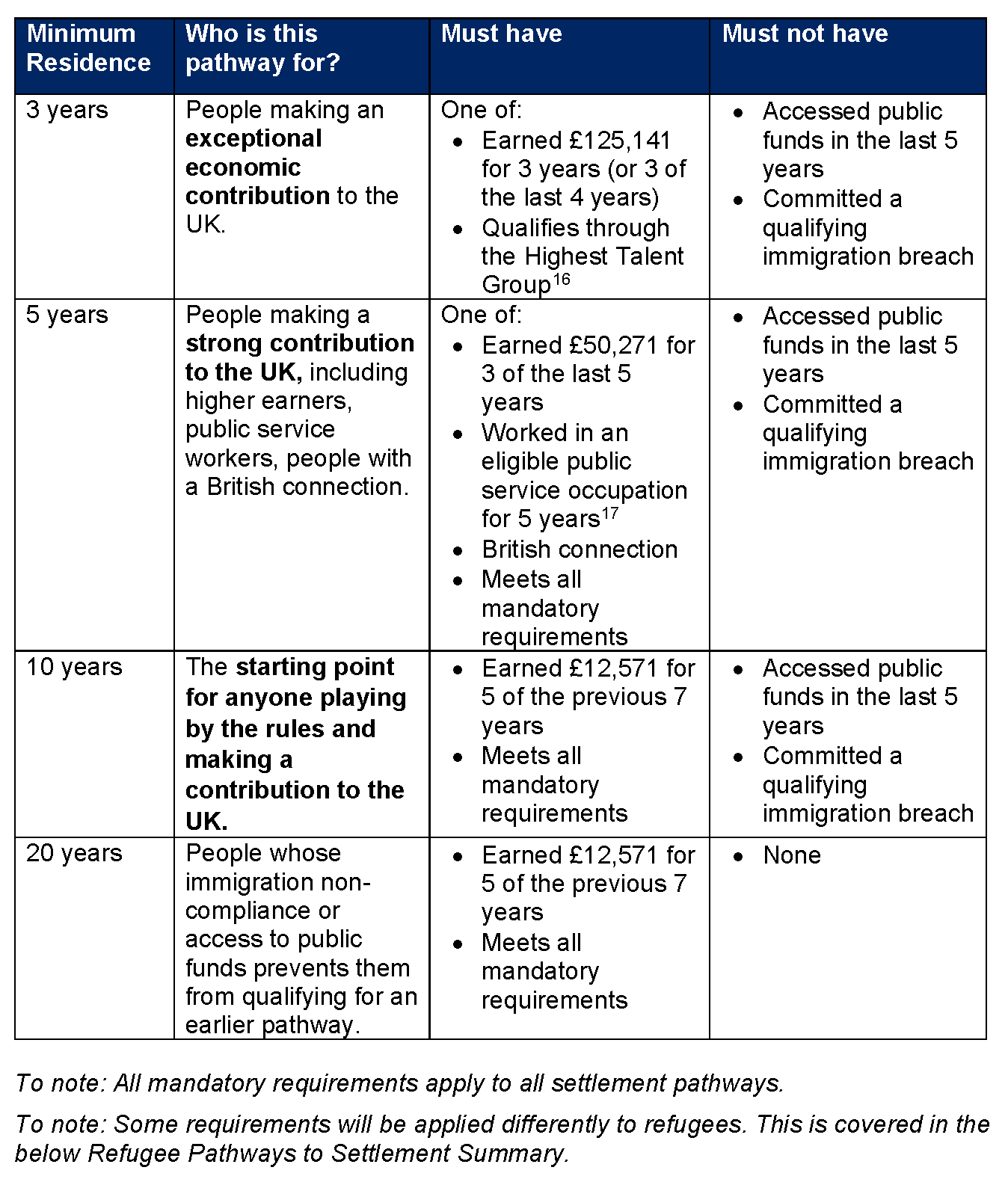
Under the new Earned Settlement framework recently announced, everyone will need to meet a minimum set of requirements with the time it takes to qualify for settlement reflecting an individual’s contribution, integration and compliance.
What are new minimum standards for settlement?
All applicants seeking settlement will need to meet minimum mandatory requirements.
The applicant must demonstrate good character and suitability.
The applicant must not have any outstanding Government debt.
The applicant must demonstrate strong English language ability.
The applicant must be able to evidence that they have passed the Life in the UK test.
The applicant must demonstrate sustained contribution to the UK.
How long will it take to qualify for settlement?
As set out in the Immigration White Paper published in May 2025, the starting point for settlement will move to 10 years, with faster and slower paths available depending on these four key principles:
Chapter 1: Character
The reformed system will reward those who play by the rules, while those who break our rules will be on a longer path to settlement, or won’t be able to settle at all.
Chapter 2: Contribution
The reformed system will reward individuals who have made a sustained and measurable contribution to the UK.
Chapter 3: Integration
The reformed system will ensure that applicants demonstrate meaningful engagement with British society.
Chapter 4: Residence
The reformed system will recognise lawful, continuous residence on a qualifying route in the UK. Individuals will not, however, qualify based on residence alone.
Further chapters then explain how the framework will apply to dependants (covered in chapter 5), vulnerable groups (covered in chapter 6) and refugees (covered in chapter 7), and the transitional arrangements for people already in the UK (covered in chapter 8).
The timings of these new requirements have yet to be announced, and we will continue to update in respect of announcements made.
In the meantime, you can read the full framework.